
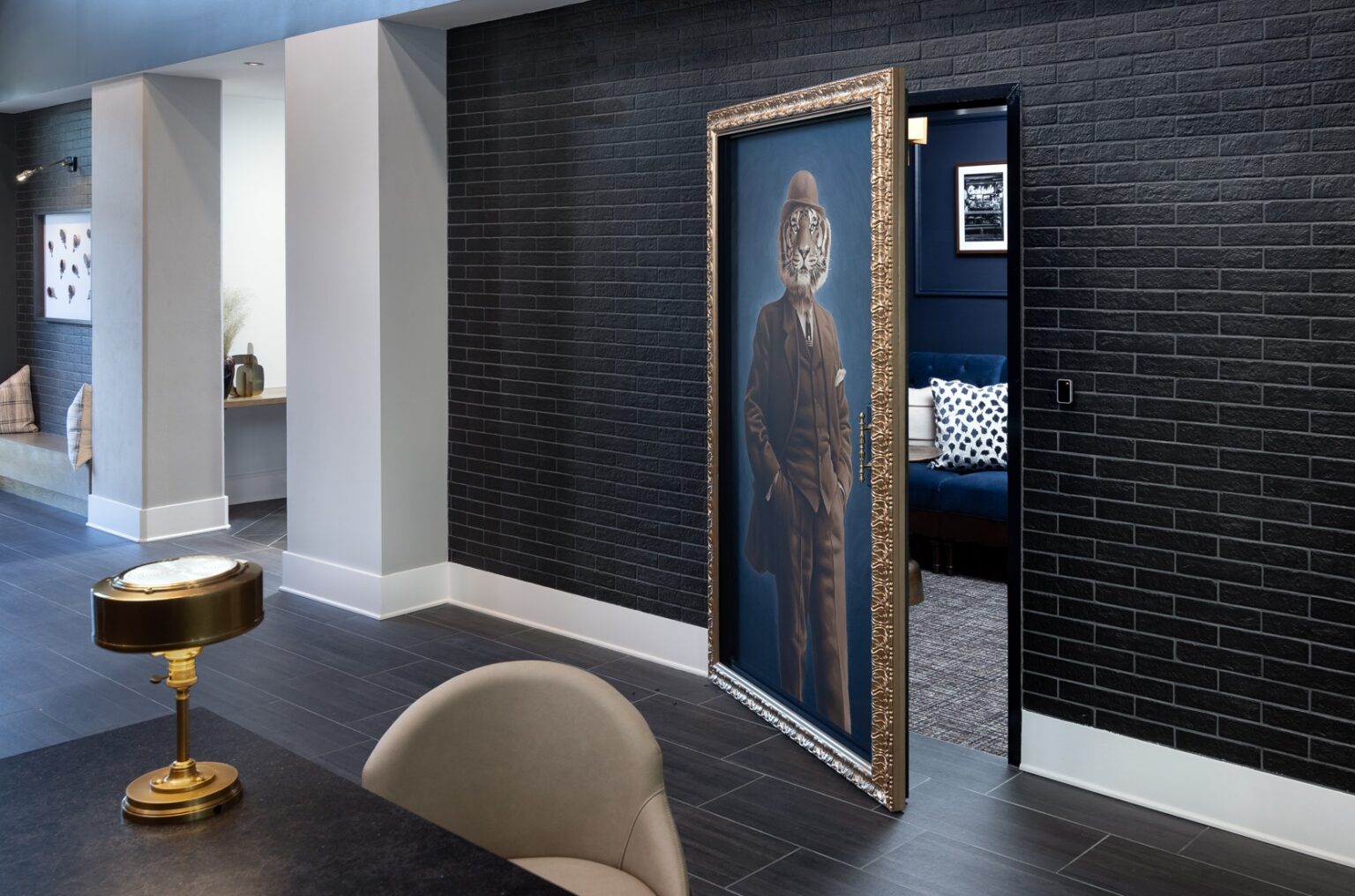
Walk into a memorable interior and chances are, it is not one individual finish, piece of furniture, or work of art that captures your attention. It is the way everything works together. The materials, color palette, lighting, furnishings, objects, and artwork create layers that make a space feel complete.
Art plays an especially important role in that equation.
Too often, artwork is treated as one of the final items on a project checklist—a way to fill an empty wall once the “real” design decisions have been made. But when art is considered as part of the design process rather than an afterthought, it can completely transform an interior. It adds personality, reinforces a sense of place, creates emotional connection, and gives a space the collected, curated quality that distinguishes a memorable environment from a simply well-designed one.
Whether we are designing a senior living community, multifamily property, student housing development, or hotel, we believe art should feel intentional. It should have a relationship to the finishes and furnishings around it, while adding another dimension to the story of the space.
Creating Spaces That Feel Collected, Not Decorated
There is an important difference between a space that feelsdecorated and one that feels collected.
A designed space can be beautiful, but sometimes everything feels a little too coordinated or expected. A collected space has depth. It feels as though the pieces have been thoughtfully discovered and assembled over time.
That does not mean every piece of art needs to match or repeat the exact colors. In fact, it often should not.
The goal is connection rather than coordination.
A piece might pull a subtle tone from a stone countertop or introduce an unexpected color that appears again in a pillow or accessory. A sculptural installation might echo the organic forms found in the lighting or furniture. Photography can reinforce the architecture, landscape, history, or culture surrounding a project.
These connections can be subtle. When they are done well, you may not immediately recognize why the room feels cohesive, you simply experience it that way.
Art Creates an Emotional Response
Interior design is ultimately about how people experience a space, and art has a unique ability to influence that experience.
It can energize, calm, intrigue, inspire, or create a sense of nostalgia. It can encourage someone to stop for a moment and look closer. It can become a conversation starter or a familiar landmark within a larger community.
This emotional component is particularly powerful in the environments we design because these are not spaces people simply pass through. They are places where people live, gather, work, celebrate, socialize, and build relationships.
In senior living, art can help create warmth, familiarity, and a sense of belonging. Residentially inspired artwork, photography, sculpture, and locally relevant pieces can move a community away from an institutional feeling and toward an environment that feels layered, sophisticated, and personal.
In multifamily communities, artwork is an opportunity to establish identity. Residents increasingly expect amenity spaces to feel more like boutique hotels, private clubs, or favorite neighborhood destinations than traditional apartment clubhouses. Art helps create that distinction and gives a property a personality residents can connect with.
Student housing provides an opportunity to be more expressive. Bold graphics, murals, unexpected installations, local references, and emerging artists can create environments that feel youthful and authentic without becoming overly themed. Art can also help turn shared spaces into memorable destinations within the property.
And in hospitality, art is often inseparable from the guest experience. The best hotels use art to tell a story—about the location, the building, the culture, or simply the attitude of the brand. Those moments become part of what guests remember long after they leave.
Connecting Art to Place
One of the most effective ways to make art meaningful is to connect it to the project’s location.
Rather than selecting generic pieces simply because they complement the palette, we look for opportunities to create a stronger relationship between the interior and its surroundings.
That might mean working with local artists, incorporating regional photography, referencing the site’s history, or interpreting the landscape in an unexpected way. The connection does not need to be literal.
Sometimes the more interesting approach is abstraction: colors inspired by the landscape, materials associated with the region, or forms that subtly reference local architecture and culture.
This creates authenticity without becoming thematic.
It also gives residents and guests something to discover. When someone learns the story behind a piece of artwork, the interior suddenly has another layer of meaning.
Art Should Be Part of the Design Conversation
Thinking about art early allows us to consider scale, sightlines, lighting, architectural moments, wall finishes, furniture placement, and even how someone moves through a space. Instead of searching for something to fit a leftover wall, we can intentionally create moments for art.
Sometimes that means one oversized piece rather than a collection of smaller works. Sometimes it means a gallery wall, dimensional installation, sculpture, custom mural, or unexpected object. In other spaces, restraint is more powerful.
Not every wall needs something on it.
The Final Layer That Makes a Space Feel Complete
Great interiors are built through layers. Architecture establishes the framework. Materials bring texture and color. Furniture creates comfort and function. Lighting establishes atmosphere. Art brings personality and emotion.
It is often that final layer transforms a beautiful space into one that feels memorable.
Across senior living, multifamily, student housing, and hospitality, people are looking for environments that feel authentic and connected to their experience—not spaces that could exist anywhere.
Art gives us another opportunity to create that connection.
When artwork is thoughtfully curated, tied to the overall design story, and selected for more than simply filling a wall, it creates moments of discovery and emotional connection while making the environment feel as though it has evolved naturally over time.
Because the most successful spaces should not feel like everything was ordered from the same catalog on the same day.
They should feel collected. They should feel personal. And most importantly, they should make you feel something.